Introduction
In today’s fast-moving work environments, stress, pressure, and burnout have become almost normal. Many people wake up tired, spend long hours multitasking, and push through deadlines without ever pausing to breathe. As a result, mental exhaustion, emotional overload, and productivity blocks are at an all-time high. This is where workplace mindfulness emerges as a powerful solution a modern spiritual tool that blends ancient wisdom with everyday professional life.
Workplace mindfulness goes beyond meditation. It invites employees, leaders, and teams to cultivate awareness, presence, emotional balance, and purposeful attention. Instead of reacting to challenges impulsively, mindfulness helps individuals respond with clarity, patience, and grounded energy. This creates a healthier workplace atmosphere and a deeper sense of inner peace. Let’s explore how workplace mindfulness works, why it’s so transformative, and how you can integrate it into your daily professional routine.
1. What Is Workplace Mindfulness?
Workplace mindfulness is the practice of bringing conscious awareness to your work activities, interactions, and environment. It means being present fully engaged in what you are doing, rather than being mentally scattered or overwhelmed. Mindfulness encourages you to focus on one task at a time, manage stress calmly, and maintain emotional balance even when things get hectic. At its core, workplace mindfulness is not about doing less work; it’s about working with clarity, intention, and a peaceful mind. It helps transform work from a stressful obligation into a meaningful experience of growth and purpose.
2. Why Mindfulness Matters in the Workplace
Workplaces today are full of distractions: constant messages, overflowing inboxes, performance pressure, noise, deadlines, and the push to multitask. Over time, this drains mental energy, reduces productivity, and affects emotional well-being. Mindfulness counteracts this by helping you:
- Focus deeply without distraction
- Think more creatively
- Make decisions with clarity
- Reduce stress and anxiety
- Strengthen emotional intelligence
- Build resilience
- Improve communication and teamwork
When mindfulness becomes part of workplace culture, the environment shifts from chaotic and stressful to supportive, balanced, and harmonious.
3. The Spiritual Dimension of Workplace Mindfulness
Mindfulness, rooted in ancient Buddhist practices, carries a subtle spiritual essence the cultivation of awareness and inner harmony. In the workplace, this doesn’t mean practicing religion; instead, it means connecting with your inner self, your intuition, and your purpose. Here’s how mindfulness brings spiritual alignment to your career:
A. It Grounds Your Energy
Instead of feeling scattered or anxious, mindfulness keeps you centered. You feel more rooted, emotionally stable, and connected to the present moment.
B. It Aligns Your Work With Your Higher Purpose
When you work with awareness, you naturally tune into what feels meaningful and fulfilling. Tasks become more than chores they become expressions of your personal values.
C. It Strengthens Compassion and Empathy
Mindfulness heightens emotional awareness, making you more patient, understanding, and kind toward colleagues, clients, and yourself.
D. It Elevates Your Vibration
A calm mind creates a peaceful energy that influences your work environment. You become someone who inspires balance, clarity, and positivity.
4. Benefits of Workplace Mindfulness
Mindfulness is not just a spiritual tool it has proven psychological and physical benefits.
Improved Focus
Mindfulness trains the brain to concentrate on one task at a time, reducing distractions and boosting efficiency.
Reduced Stress
Slow breathing, awareness, and mental stillness help lower cortisol levels, easing anxiety and tension.
Better Communication
When fully present, you listen deeply and speak clearly. This strengthens teamwork and reduces misunderstandings.
Higher Productivity
With clarity comes better decision-making, faster problem solving, and improved task management.
More Creativity
A calm mind is naturally more imaginative. Mindfulness helps remove mental blocks and unlock innovative ideas.
Emotional Intelligence
You learn to observe emotions without reacting impulsively, making you more composed and resilient.
5. How to Practice Mindfulness at Work
Mindfulness doesn’t require long meditation sessions. Small habits practiced consistently can make a big difference.
A. Start With a Morning Grounding Ritual
Before beginning your tasks, take one minute to breathe deeply and set an intention for the day.
B. Practice Single-Tasking
Do one task at a time. Give it your full attention before moving to the next.
C. Take Micro-Mindfulness Breaks
A 10-second pause every hour where you breathe, relax your shoulders, and refocus resets your energy.
D. Mindful Communication
Listen fully when someone speaks. Pause before responding. Speak calmly and clearly.
E. Mindful Email Writing
Take a breath before sending. Read the message with awareness to make sure it reflects clarity and respect.
F. Create a Calm Workspace
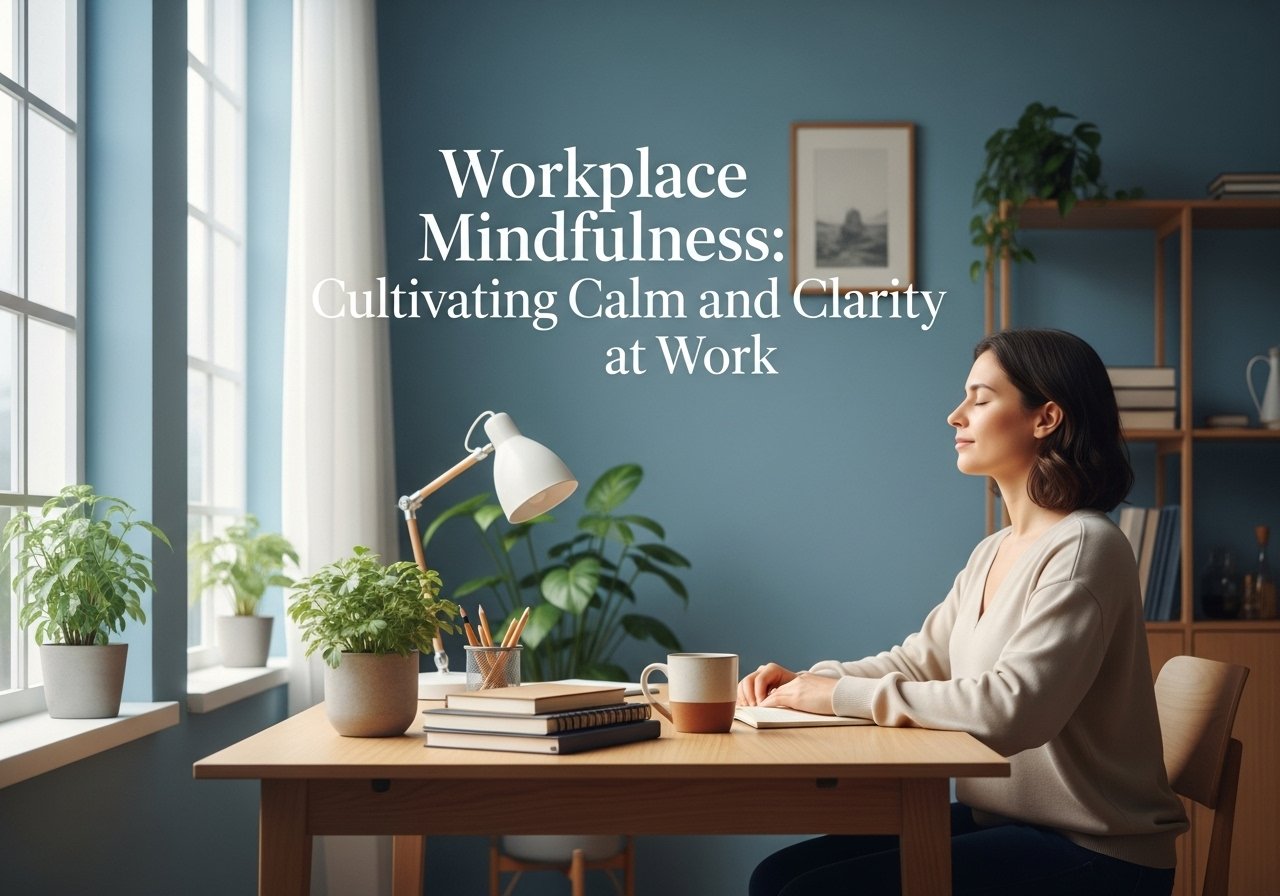
Even small touches plants, soft colors, natural light help your nervous system stay relaxed.
G. Practice Emotional Awareness
Notice when stress, frustration, or overwhelm arises. Observe it without judgment.
H. Mindful Eating During Lunch
Eat slowly, enjoy each bite, and disconnect from screens. This resets your mind for the rest of the day.
6. Workplace Mindfulness for Leaders
Mindful leadership is becoming a major trend globally. Leaders who practice mindfulness:
- Communicate with wisdom
- Build trust
- Inspire calm and confidence
- Make intentional decisions
- Handle conflict peacefully
- Support the emotional well-being of their teams
A mindful leader doesn’t just manage people they elevate them.
7. How Mindfulness Reduces Workplace Burnout
Burnout happens when the mind remains in a constant state of stress. Mindfulness breaks this cycle by:
- Slowing down mental chatter
- Reducing emotional overload
- Bringing awareness to unhealthy work habits
- Encouraging rest, balance, and boundaries
- Creating space for recovery and realignment
Employees who practice mindfulness report more job satisfaction, better mental health, and a greater sense of purpose.
8. Bringing Mindfulness Into Workplace Culture
Organizations worldwide are now integrating mindfulness through:
- Meditation sessions
- Wellness rooms
- Quiet spaces
- Mindful communication workshops
- Breathwork classes
- Mental health programs
- Flexible work schedules
- Awareness-based leadership training
When a workplace supports mindfulness, productivity rises but so does happiness.
Conclusion
Workplace mindfulness is not just a trend; it is a profound shift in how we work, communicate, and live. It reminds us that productivity does not have to mean stress, and success does not require burnout. By bringing awareness into your daily tasks, you cultivate clarity, emotional balance, and inner peace. Work becomes more meaningful, communication becomes more compassionate, and your energy becomes more aligned. Mindfulness empowers you to move through your workday with calm confidence grounded, focused, and spiritually connected.
FAQs
1. How can I practice mindfulness at work if I have a busy schedule?
You don’t need long meditation sessions mindful work is built through small habits. Simple techniques like taking slow breaths before starting a task, practicing single-tasking, pausing for 10 seconds every hour, and grounding yourself before meetings help you stay centered. These micro-mindfulness moments fit into any schedule and still create a powerful shift in focus, calmness, and clarity.
2. Does mindfulness really improve productivity in the workplace?
Yes. Mindfulness reduces mental clutter, improves focus, and strengthens emotional control all of which directly enhance productivity. When the mind is calm and present, you work faster, think more clearly, and make fewer mistakes. Many companies worldwide now implement mindfulness programs because they consistently lead to better performance and lower burnout.